


Dateline: [28/02/2026]
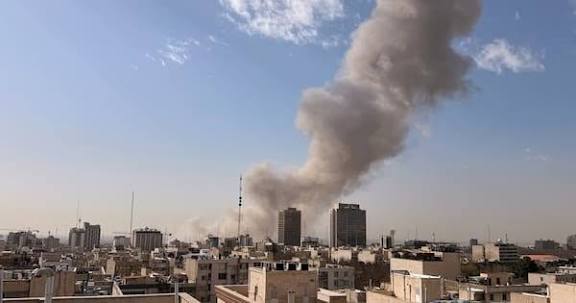
In a swift and stunning turn of events, the world wakes up today to news of a major military operation by the United States and its allies targeting Iran. Operation “Persian Dawn” has seen widespread airstrikes across key Iranian military installations, command centers, and suspected nuclear facilities, effectively marking the beginning of a full-scale invasion. This move, while rumored for months, has taken the international community by surprise and is poised to have profound and long-lasting consequences.
A History of Friction: The Roads to “Persian Dawn”
To understand the motivations and the current state of play, it’s crucial to examine the complex and strained relationship between the US and Iran over the past few decades. The story begins in 1979 with the Iranian Revolution, which saw the overthrow of the US-backed Shah and the rise of the Islamic Republic under Ayatollah Khomeini. This event solidified a deep-seated distrust between the two nations, further exacerbated by the Hostage Crisis later that year.
Since then, the relationship has been a series of escalations and failed diplomatic attempts. The defining issue in recent years has been Iran’s nuclear program. While Iran maintains that its program is for peaceful purposes, the US and its allies have consistently accused it of pursuing nuclear weapons. This led to the landmark Joint Comprehensive Plan of Action (JCPOA) in 2015, which aimed to curb Iran’s nuclear activities in exchange for sanctions relief. However, the Trump administration withdrew from the agreement in 2018, re-imposing crippling sanctions on Iran.
The Trigger: A Confluence of Factors
The immediate catalyst for Operation “Persian Dawn” appears to be a combination of intelligence suggesting imminent Iranian attacks on US interests in the region and a growing frustration with diplomatic efforts. According to the Pentagon, there have been a series of provocative Iranian actions in recent months, including attacks on shipping in the Persian Gulf and increased support for its proxy militias across the Middle East.
Furthermore, intelligence reportedly indicates that Iran has made significant progress in its nuclear program since the collapse of the JCPOA, including enriching uranium to levels closer to weapons-grade. While Iran has consistently denied these claims, the US administration appears to have deemed the risk of a nuclear-armed Iran unacceptable.
The Strategic Objectives: What’s This All About?
The primary objective of Operation “Persian Dawn” appears to be to neutralize Iran’s perceived ability to disrupt regional stability and to dismantle its nuclear program once and for all. This involves a multi-pronged approach:
- Eliminating Immediate Threats: Initial airstrikes have focused on neutralizing Iranian conventional forces, including air defenses, missile systems, and naval vessels, to ensure the safety of US forces in the region.
- Degrading Proxy Militias: The US is also targeting key proxy groups supported by Iran, such as Hezbollah in Lebanon and the Houthi rebels in Yemen, to weaken Iran’s regional influence.
- Securing Nuclear Facilities: Special forces have reportedly been deployed to secure and dismantle key nuclear installations, preventing Iran from further developing its nuclear capability.
- Regime Change (Potential): While not explicitly stated as a goal, the invasion has the potential to destabilize the existing Iranian regime and pave the way for a new leadership that is more amenable to US interests.
Looking Ahead: Uncertainty and the Road to Stability
The invasion of Iran is a monumental event with far-reaching implications. While the immediate focus is on the military campaign, the long-term consequences are difficult to predict. The invasion has the potential to trigger a wider regional conflict, as Iran’s allies may be drawn into the fray. Furthermore, the humanitarian crisis in Iran is likely to worsen, placing a strain on international aid organizations.
The ultimate success of Operation “Persian Dawn” will depend not only on the military outcome but also on the US’s ability to manage the post-conflict phase. Establishing a stable and democratic government in Iran will be a complex and challenging task. The international community must now come together to support the Iranian people and to work towards a peaceful and lasting solution to the conflict.
 Metropolitan