


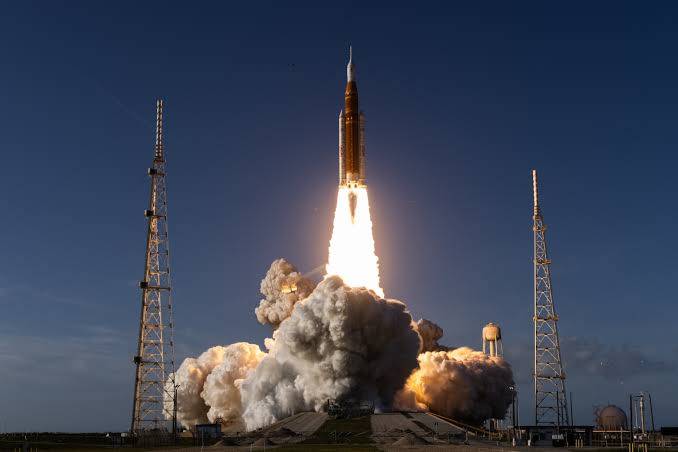
The moon isn’t just a nightlight anymore—it’s a destination. Yesterday, April 1, 2026, the world watched in awe as NASA’s Artemis II mission roared off the launchpad at Kennedy Space Center, marking the first time in over 50 years that humans have headed toward the lunar neighborhood.
Forget the “April Fools” jokes; this was the real deal. Four astronauts are currently hurtling through space at speeds that would make a Formula 1 driver dizzy, all to pave the way for humanity’s permanent return to the Moon.
The Crew: A New Era of Explorers
This isn’t just another flight; it’s a mission of “firsts.” The four-person crew represents the diversity of modern exploration:
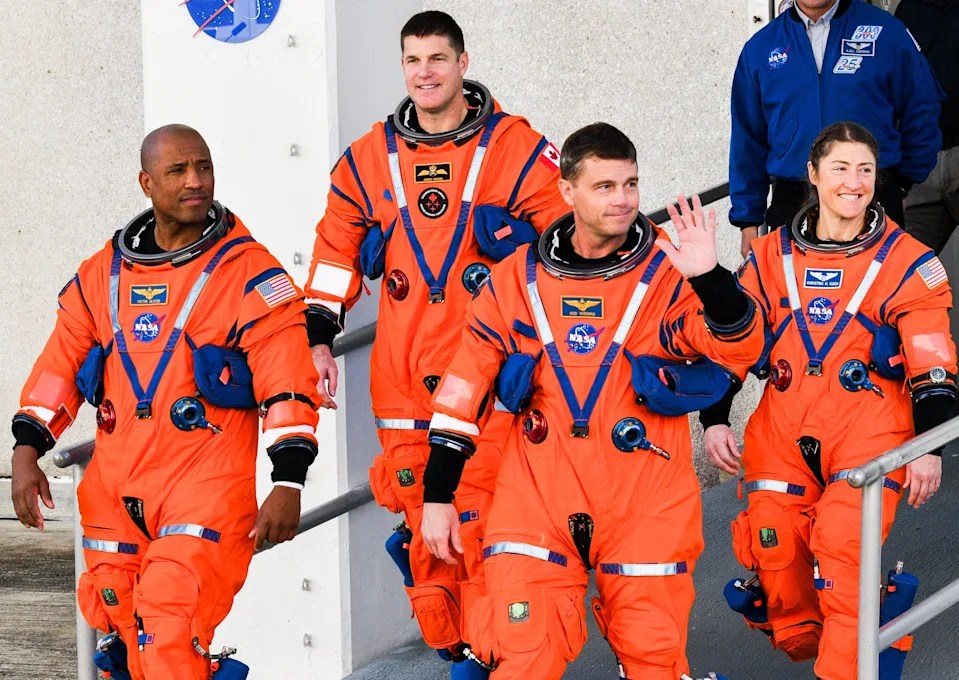
- Commander Reid Wiseman (NASA): The veteran leader at the helm.
- Pilot Victor Glover (NASA): Making history as the first person of color to leave Earth’s orbit.
- Mission Specialist Christina Koch (NASA): The record-breaking astronaut who is now the first woman on a lunar mission.
- Mission Specialist Jeremy Hansen (CSA): The first Canadian to ever venture into deep space.
What Happened Yesterday?
The Space Launch System (SLS) rocket—the most powerful booster ever built—performed flawlessly. Despite a minor nail-biting moment involving a battery instrument and a brief “space toilet” fan hiccup (hey, even high-tech capsules have plumbing issues!), the Orion spacecraft successfully reached Earth orbit.
As of today, the crew is performing a series of “checkout” maneuvers. They aren’t just passengers; they are testing the life-support systems, manual piloting, and communication arrays that will be vital for the Artemis III landing in 2028.
Key Mission Stats
| Feature | Detail |
| Launch Date | April 1, 2026 |
| Spacecraft | Orion (Integrity) |
| Rocket | Space Launch System (SLS) |
| Mission Duration | ~10 Days |
| Max Distance | 248,655+ miles from Earth |
What’s Next for the Artemis II Crew?
The mission is currently in the High Earth Orbit phase. Later today, April 2, the crew will execute the Translunar Injection (TLI) burn. This is the “point of no return” maneuver that will slingshot Orion out of Earth’s gravity and toward the Moon.
Over the next week, they will:
- Flyby the Moon: Get a front-row seat to the lunar far side.
- Test Deep Space Comms: Ensure we can talk to Earth from a quarter-million miles away.
- Break Records: Travel farther from Earth than any human in history, surpassing the record set by Apollo 13.
Why This Matters
Artemis II isn’t just about a flyby. It is the final “stress test” before NASA puts boots back on the lunar surface. By the end of this decade, the goal isn’t just to visit—it’s to stay. With plans for a Lunar Gateway (a mini-space station) and a permanent base at the Moon’s South Pole, we are watching the birth of a multi-planetary species.
“The nation and the world have been waiting a long time to do this again,” Commander Reid Wiseman said before launch. “We are ready.”
Stay tuned as we track Orion’s journey to the lunar far side and back!
Which part of the Artemis II mission are you most excited to see—the lunar far-side photos or the high-speed splashdown in the Pacific?
 Metropolitan