


By [Ray] | November 28, 2025
In the dusty, sun-drenched polling stations of Mbeere North, a political earthquake just happened.
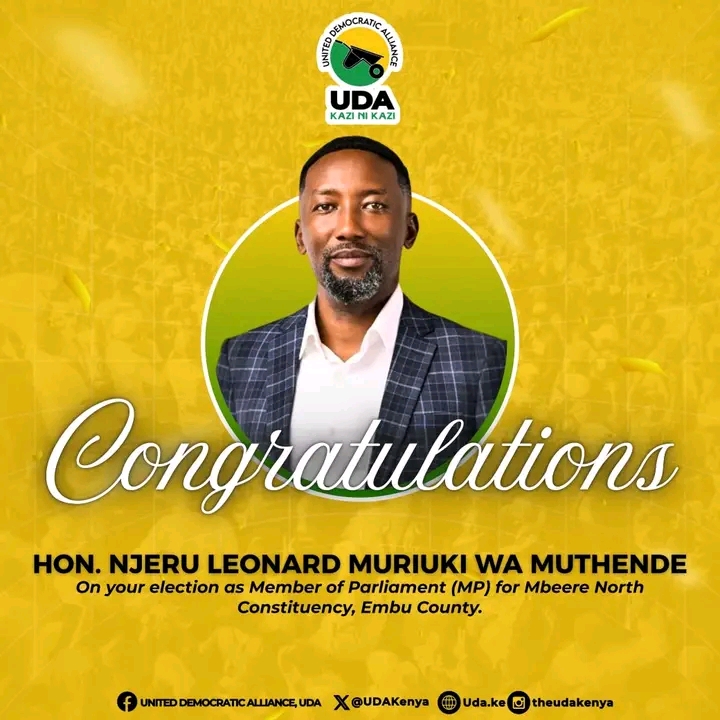
Yesterday, Leonard Muriuki Wamuthende didn’t just win a by-election; he dismantled a political siege. Facing down the well-oiled machineries of established heavyweights Newton Kariuki and Duncan Mbui, Wamuthende emerged from the ballot boxes not just as the new Member of Parliament, but as a symbol of a shifting tide in Mt. Kenya politics.
For weeks, the narrative was clear: the odds were stacked against him. But as the final tallies streamed in last night, the “underdog” had become the undisputed champion.
The “David vs. Goliath” Battle
To understand the magnitude of this win, you have to look at who he was up against.
- Newton Kariuki (Democratic Party): Backed by a powerful opposition brigade and the intense grassroots mobilization of former Deputy President Rigathi Gachagua’s allies, Kariuki was the perceived frontrunner of the “resistance.”1 His campaign was loud, visible, and seemingly unstoppable.
- Duncan Mbui: A formidable contender who brought his own weight to the ring, Mbui represented a significant faction of the electorate that Wamuthende had to court—or conquer.
The contest was widely seen as a proxy war for the soul of the region’s politics. Critics and pundits alike whispered that the UDA candidate would be swallowed up by the “Mountain’s” internal rifts. The atmosphere was thick with tension, allegations of intimidation, and the kind of high-stakes drama that usually scares off the faint-hearted.
How He Did It: A Victory of Resilience
Wamuthende’s victory wasn’t about having the loudest convoy; it was about the “Ground”.
While his opponents focused on national-level narratives and power plays, Wamuthende and his team kept their ears to the ground. His message was simple: Development over Drama.
“This win is a clear and undeniable message from the people… a rejection of fear, threats, and disorder, and an overwhelming embrace of hope.” — UDA Statement on the Victory
Voters in areas like Siakago and Karambari turned out to reject the “chaos” narrative.2 They weren’t swaying to the tunes of external kingmakers; they were looking for a leader who would address the immediate needs of Mbeere North—water, roads, and bursaries—rather than using their constituency as a battlefield for national scores.
The “Odds” That Were Beaten
- The Proxy War Pressure: This wasn’t just a local election. It was a litmus test for the ruling party’s grip on the region. Wamuthende had to carry the burden of the entire government’s performance on his shoulders while facing a hostile opposition eager to embarrass the administration.
- The Intimidation Factor: Reports of “fear and threats” marred the campaign period, with hotspots like Kanyuambora being flagged for tension.3 Standing firm in such an environment requires a spine of steel.
- The Split Vote Threat: Facing two strong opponents often splinters the vote in unpredictable ways. Wamuthende managed to consolidate enough of the base to secure a decisive mandate, avoiding the trap of a fractured electorate.
What This Means for Mbeere North
With the dust settling, Mbeere North has a new MP who has already proven he can swim upstream. The victory creates a direct link between the constituency and the central government, promising a tenure focused on stability and “principled leadership.”4
For Newton Kariuki and Duncan Mbui, the loss is a stinging reminder that in politics, endorsements and machinery are useless if the Wanjiku (the common citizen) has decided to move in a different direction.
Congratulations to Hon. Leonard Wamuthende. You fought the giants, you braved the storm, and you won. Now, the real work begins.
 Metropolitan