


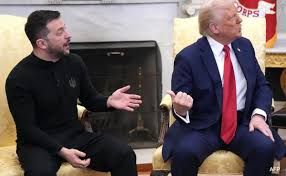
During Ukrainian President Volodymyr Zelenskyy’s recent visit to the White House, a highly contentious meeting unfolded between him, U.S. President Donald Trump, and Vice President JD Vance. The discussions, intended to finalize a deal concerning Ukraine’s rare earth minerals, rapidly deteriorated into a heated exchange. Trump accused Zelensky of “disrespecting the United States of America in its cherished Oval Office” and asserted that Zelensky was “not ready for Peace if America is involved.”
The meeting concluded abruptly, with no agreement reached and Zelensky’s departure from the White House.
This incident has elicited a spectrum of reactions both domestically and internationally. Within the United States, Republican leaders largely supported Trump’s actions, commending his stance on demanding accountability from Ukraine. Conversely, Democratic figures criticized the administration’s approach, expressing concern over the potential erosion of U.S.-Ukraine relations.
Globally, European leaders have rallied behind Zelensky, emphasizing the importance of continued support for Ukraine amid ongoing conflicts with Russia.

The fallout from this meeting has sparked debates about the future of U.S. foreign policy, particularly regarding its commitments to allies and its role in international diplomacy. As the situation evolves, the international community watches closely, anticipating the long-term implications for global geopolitical dynamics.
 Metropolitan