


Introduction
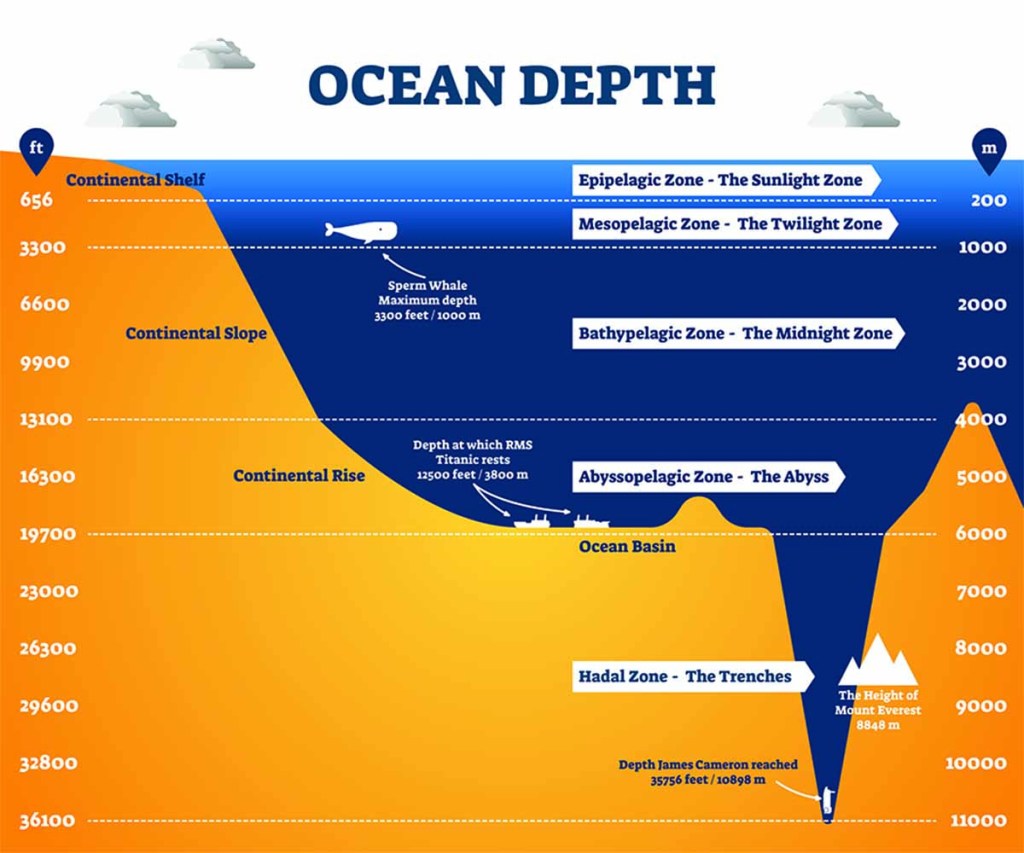
The Mariana Trench is the deepest part of the world’s oceans and represents one of the last frontiers of human exploration on Earth. Situated in the western Pacific Ocean, to the east of the Mariana Islands, it reaches a maximum known depth of about 36,000 feet (nearly 11,000 meters) at a point known as the Challenger Deep. This trench is a significant geological and biological marvel, offering insights into Earth’s processes and the resilience of life in extreme environments.
Geological Formation and Structure
The Mariana Trench is a result of tectonic activity, specifically the process of subduction. This occurs when one tectonic plate, in this case, the Pacific Plate, is forced beneath another, the smaller Mariana Plate. This subduction zone creates a deep underwater trench as the oceanic crust is pulled downward into the mantle. The trench extends approximately 1,550 miles (2,500 kilometers) in length and about 45 miles (70 kilometers) in width.
The depth and structure of the Mariana Trench are mapped using sonar technology and deep-sea submersibles. The Challenger Deep, the trench’s lowest point, has been the focus of several expeditions, most notably by the bathyscaphe Trieste in 1960 and James Cameron’s Deepsea Challenger in 2012. These missions have confirmed not only the extreme depths but also the complex topography of the trench, including steep walls, mud volcanoes, and hydrothermal vents.
Biological Diversity and Adaptations
Despite the extreme pressure, frigid temperatures, and complete darkness, the Mariana Trench hosts a variety of life forms. These organisms have evolved unique adaptations to survive in such an inhospitable environment. For instance, some fish species possess pressure-resistant enzymes and membranes, while certain microorganisms, known as extremophiles, thrive in the high-pressure, chemically-rich hydrothermal vent ecosystems.
Deep-sea expeditions have discovered fascinating creatures, such as the snailfish, which is believed to be the deepest-living fish, as well as giant amoebas, amphipods, and various bioluminescent organisms. The unique conditions of the trench also foster chemosynthetic ecosystems, where bacteria convert chemicals from hydrothermal vents into energy, supporting a diverse web of life.
Scientific and Environmental Significance
The Mariana Trench is not only a biological haven but also a critical site for scientific research. Studies conducted in the trench contribute to our understanding of geology, marine biology, and the effects of extreme environments on living organisms. Research into the trench’s microbial life has implications for biotechnology and the search for life in similar extreme conditions on other planets.
Moreover, the trench plays a crucial role in Earth’s carbon cycle. It is a significant site for the sequestration of carbon dioxide, where organic matter sinks from the surface and is stored in the deep ocean, potentially mitigating the impacts of climate change.
Human Exploration and Technological Advances
Human exploration of the Mariana Trench has pushed the boundaries of technology and engineering. Early expeditions, like the descent of the Trieste in 1960, relied on sturdy, pressure-resistant materials and innovative design to withstand the intense pressures found at such depths. Modern explorations have benefited from advances in robotics, unmanned submersibles, and remote sensing technologies, allowing for more detailed and extensive studies of the trench.
James Cameron’s solo dive in 2012 marked a significant achievement, demonstrating the capabilities of modern engineering and rekindling interest in deep-sea exploration. These missions not only gather scientific data but also inspire future generations of scientists, engineers, and explorers.
Conclusion
The Mariana Trench remains one of the most mysterious and intriguing places on Earth. Its extreme conditions, unique biological communities, and geological significance offer invaluable insights into the resilience of life and the dynamic processes shaping our planet. As technology advances, continued exploration of the Mariana Trench promises to unveil more of its secrets, enhancing our understanding of the deep sea and its vital role in Earth’s ecosystem. The trench stands as a testament to the enduring human spirit of exploration and discovery, reminding us of the vast unknowns that still lie beneath the ocean’s surface.
 Metropolitan