


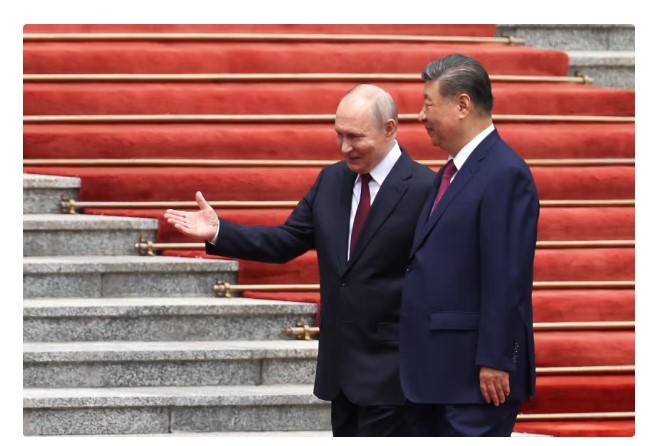
The diplomatic choreography in Beijing just hit a fever pitch. Hot on the heels of a highly scrutinized visit from US President Donald Trump, Russian President Vladimir Putin touched down in the Chinese capital for his monumental 25th official visit to China.
As both nations celebrate the 25th anniversary of the Russia-China Treaty of Good-Neighborliness and Friendly Cooperation, this high-stakes summit proved that the “no-limits” partnership is shifting into an entirely new gear.
Behind the crimson flags, booming military bands, and grand processions at the Great Hall of the People, a clear geopolitical map emerged. This wasn’t just a routine photo-op—it was a calculated masterclass in rewriting the rules of global trade and diplomacy.
Here is how the ledger balances out for both giants.
The Russian Ledger: What Putin Secured
For Moscow, the stakes couldn’t have been higher. Facing prolonged economic isolation from Western markets, Putin traveled with a heavy-hitting delegation of energy, infrastructure, and financial titans to secure Russia’s long-term economic survival.
- The Energy Lifeline: The focal point of the closed-door meetings was the massive Power of Siberia 2 (PS2) pipeline. Intended to route 50 billion cubic meters of natural gas annually to China, it represents Moscow’s premier opportunity to permanently offset lost European exports. While price negotiations remain a brutal game of leverage, the progress forged during this trip keeps Russia’s primary economic engine chugging forward.
- A Ring of Diplomatic Armor: Coming directly after Trump’s Beijing departure, the optics were invaluable for the Kremlin. Being received as an “ally and trusted partner”—welcomed by a sitting member of the Chinese Politburo—sent a vivid message to the West: Russia is far from isolated.
- Sanction Sidestepping: Over forty bilateral documents were signed, mapping out a deep alignment between Russia’s development strategy through 2030 and China’s upcoming economic plans. This ensures a steady flow of consumer goods, automotive tech, and financial integration to keep Russian domestic markets stable.
The Chinese Ledger: What Xi Secured
For President Xi Jinping, playing host to the world’s most polarizing leaders within a single week cemented a core narrative: all major global roads now run through Beijing.
   [ The Beijing Pivot ]
          Beijing
          /     \
         /       \
  (Washington)   (Moscow)
- Geopolitical Center Stage: By beautifully mirroring the grand welcomes of both Trump and Putin, China positioned itself not as a subordinate player, but as the indispensable structural pillar of a multipolar world order.
- The Ultimate Buyer’s Market: With Russia forced to turn eastward, China holds all the cards in trade negotiations. Xi secured an incredibly advantageous position to demand discounted commodity prices, ensuring cheap, stable access to oil, gas, and agricultural goods to fuel China’s industrial machine.
- Strategic Buffer Zone: Aligning with Moscow allows Beijing to solidify its northern border security. By establishing an ironclad partnership across their shared 2,615-mile border, China frees up its strategic bandwidth to focus heavily on economic competition and maritime security in the Indo-Pacific.
The Master Takeaway
While the public speeches were wrapped in poetic idioms—with Xi warmly noting that “one day apart feels like three autumns”—the underlying reality is purely pragmatic. China is successfully balancing the tightrope of maintaining its vital economic ties with the West while simultaneously acting as the primary lifeline for a dependent Russia.
For the rest of the world, the Beijing summit makes one thing crystal clear: the architectural shift toward a multipolar international system isn’t just coming—it’s already here.
For a deeper visual dive into how the diplomatic choreography unfolded on the ground in Beijing, check out this detailed breakdown: Putin Meets Xi Jinping in Beijing. This report contrasts the optics and strategic timing of the back-to-back superpowers visiting China.
 Metropolitan