

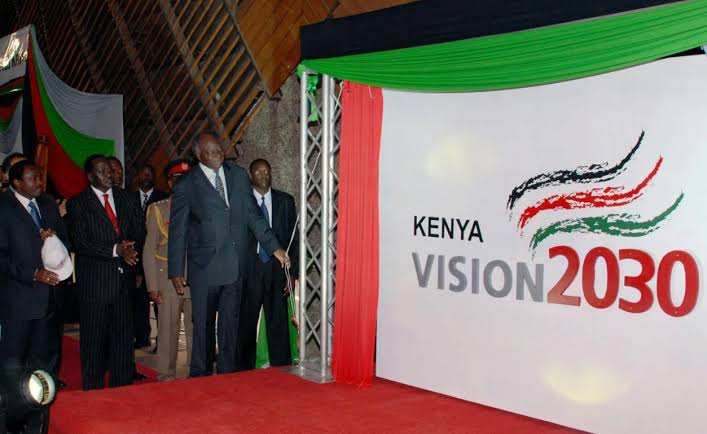
In the heart of every Kenyan who remembers his presidency, Mwai Kibaki stands as a titan of progress. He was a man of quiet determination, whose economic acumen and visionary leadership pulled Kenya from the brink and set it on a path to prosperity. His magnum opus, Kenya Vision 2030, was more than just a policy paper; it was a national promise—a detailed blueprint to transform Kenya into a newly industrializing, middle-income country providing a high quality of life for all its citizens by the year 2030.
Launched in 2008, this ambitious plan was built on three pillars: the Economic, the Social, and the Political. As we stand just a few years from the 2030 deadline, it is a fitting tribute to this great statesman to ask: Where are we with the Vision? What have we achieved, where have we faltered, and how can we, especially the youth, carry this torch forward to honor his legacy?
The Victories: Where Kibaki’s Vision Shines Bright
To deny the monumental strides made under Vision 2030 would be to ignore the very landscape we inhabit today. The progress is tangible, visible, and has fundamentally altered Kenyan society.

- Infrastructure Revolution: This is perhaps the most celebrated success. The iconic Thika Superhighway, the expanding Lamu Port (LAPSSET), the Standard Gauge Railway (SGR), and countless bypasses and road networks have physically interconnected the country, boosting trade and reducing travel times. During the initial phase of the vision, infrastructure investment as a percentage of GDP saw a significant increase, often hovering around $7\%-8\%$, a huge leap from previous years.
- The ICT & Financial Hub: Kenya has firmly established itself as a continental leader in technology and financial services. The revolutionary mobile money service, M-Pesa, became a global case study. The government’s investment in submarine fiber optic cables like TEAMS (The East African Marine System) dramatically reduced internet costs and increased speeds, fueling a vibrant tech startup ecosystem in Nairobi, fondly nicknamed the “Silicon Savannah.”
- Education for All: While initiated before Vision 2030, the Free Primary Education (FPE) policy was a cornerstone of the social pillar. It dramatically increased enrollment rates, giving millions of children a chance at a better future. Gross primary school enrollment rates soared to over $100\%$ (due to the enrollment of over-age students), a testament to its impact.
- Constitutional and Governance Reforms: The promulgation of the 2010 Constitution was a landmark achievement under the political pillar. It introduced devolution, a robust bill of rights, and created independent commissions aimed at strengthening governance and distributing power away from a centralized authority.

The Hurdles: Where the Dream Met Reality
Despite the impressive gains, the journey has not been without its serious challenges. Some key targets remain elusive.
- The Manufacturing Stalemate: A critical goal of the economic pillar was to grow the manufacturing sector to contribute at least $15\%$ to the Gross Domestic Product (GDP). Unfortunately, this has not materialized. The sector’s contribution has stagnated, and in some years even declined, hovering around $7\%-8\%$. Reasons are multifaceted, including high energy costs, competition from cheap imports, and an unfavorable regulatory environment.
- The Scourge of Corruption: Endemic corruption has been the single greatest impediment to realizing the Vision’s full potential. It has inflated the cost of major projects, diverted funds meant for public services, and eroded public trust. Despite the establishment of the Ethics and Anti-Corruption Commission (EACC), the fight against graft remains a formidable challenge, slowing down progress across all pillars.
- Youth Unemployment: While the economy has grown, it has not created enough decent jobs for the burgeoning youth population. The gap between the skills possessed by graduates and the needs of the job market persists, leading to widespread underemployment and frustration among young adults.
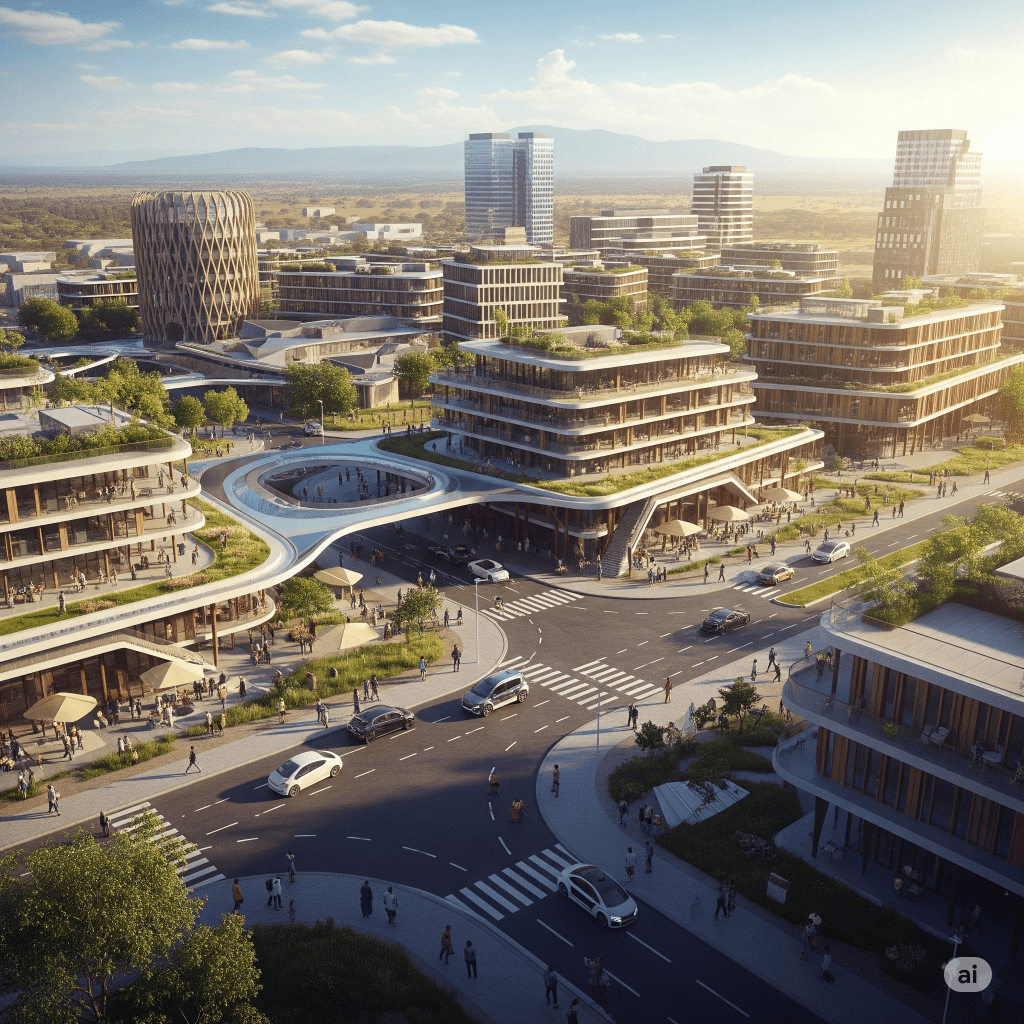
- Ambitious Projects Lagging: Some flagship projects have struggled to take off as envisioned. Konza Technopolis, billed as Africa’s smart city, has seen significantly slower development than projected. Similarly, the attainment of food security through large-scale irrigation projects like Galana-Kulalu has faced immense implementation and financial hurdles.
Carrying the Baton: Why Vision 2030 Still Matters

It is easy to look at the shortfalls and grow cynical. But that would be a disservice to the man who dared us to dream big. Vision 2030 was never about achieving a perfect utopia by a fixed date. It was about setting a direction, a national aspiration that transcends political cycles.
The core principles of the Vision—a globally competitive economy, a just and equitable society, and a democratic political system—are more relevant today than ever. They are the guideposts that should inform our national dialogue, our policy choices, and our individual actions.
To the young adults of Kenya, the “digital natives” who have grown up in the era of Vision 2030’s implementation, this is your inheritance. President Kibaki and his team laid the foundation. They built the highways you drive on and laid the cables that connect you to the world. They gave you a new constitution that empowers you.
Honoring him is not about nostalgia. It is about taking ownership.
- Innovate and Create: The ICT infrastructure is in place. Build the next M-Pesa. Create solutions for agriculture, healthcare, and education. Fill the manufacturing gap with innovative, locally-sourced products.
- Demand Accountability: Use the democratic spaces and institutions established under the 2010 Constitution. Demand transparency and hold your leaders accountable for every shilling of public money. Reject the politics of division and embrace the issue-based, development-focused leadership that Kibaki championed.
- Embrace the Hustle with Integrity: Build your businesses, pursue your careers, and contribute to the economy, but do so with integrity. A thriving nation cannot be built on a foundation of corruption.
President Mwai Kibaki gave us a map. We may have taken some detours, and some parts of the road have been rougher than anticipated. But the destination remains the same: a prosperous, dignified, and united Kenya. The work is not finished. Let’s pick up the tools, with renewed vigor and a shared sense of purpose, and complete this magnificent symphony in his honor. The best is yet to come.
 Metropolitan