


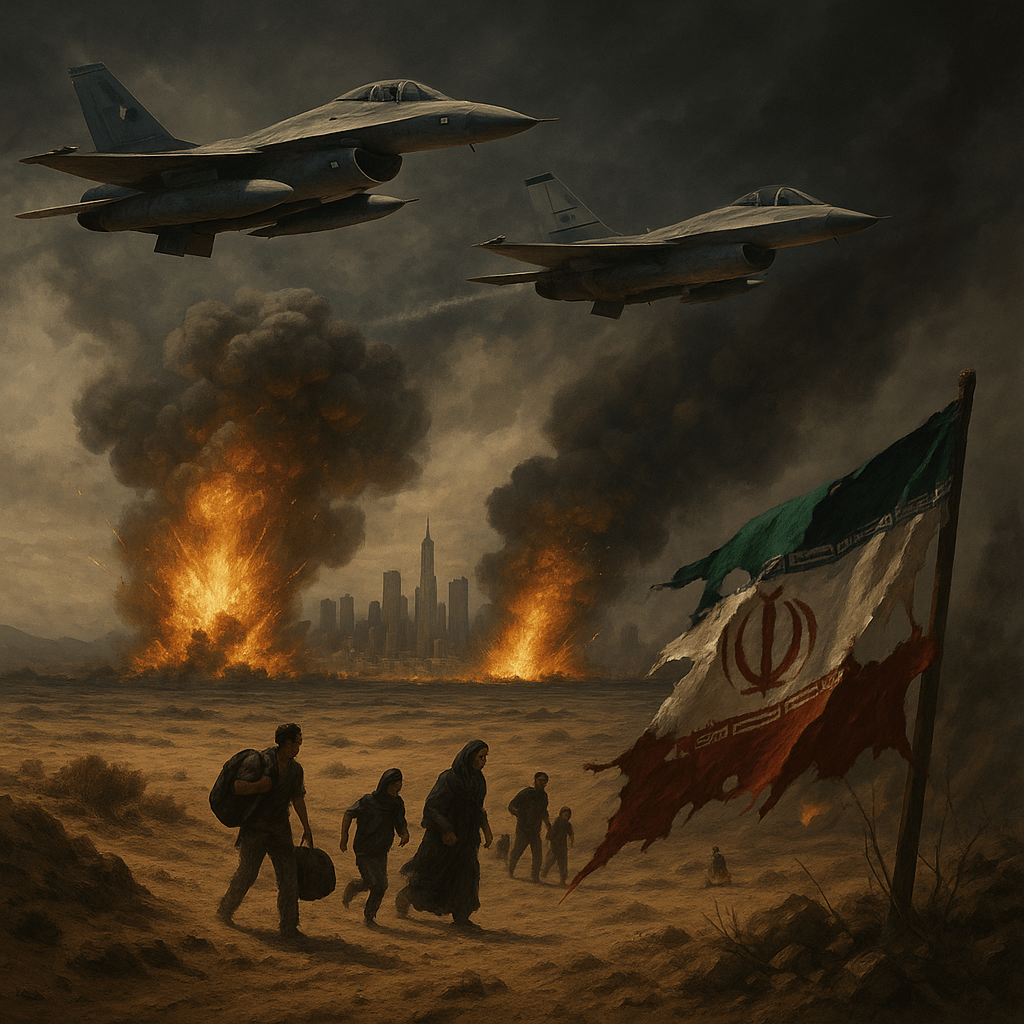
The world woke up to a historic and dangerous shift this week. After years of rising tensions and shadow conflicts, the war between Israel and Iran has exploded into full-scale combat — and now, the United States has officially entered the battlefield.
What began as a regional feud has morphed into a potentially global crisis, and the stakes have never been higher.
🧨 The Spark: How It All Started
The seeds of this war go back decades. Iran’s nuclear ambitions, its regional influence through militant groups, and Israel’s vow never to allow a nuclear-armed Iran created a volatile powder keg.
But the current war was triggered just days ago, when Israel launched a surprise offensive targeting over a hundred Iranian military and nuclear sites. Massive airstrikes, drone attacks, and cyber warfare paralyzed large parts of Iran’s defense system. Panic erupted in Tehran. Power was lost. Over 100,000 residents fled north to escape what many feared was the beginning of an all-out invasion.
Iran responded with fury—firing waves of missiles and drones into Israeli cities. Sirens wailed across Tel Aviv. Civilians scrambled for shelter. A once cold conflict had become a red-hot war.
🇺🇸 The U.S. Steps Into the Fire
For months, the U.S. had supported Israel from the sidelines—providing intelligence, logistics, and diplomatic backing. But that changed dramatically in the early hours of June 21, 2025, when the U.S. military launched coordinated airstrikes deep into Iranian territory.
Using stealth bombers and precision-guided missiles, American forces targeted Iran’s most heavily fortified nuclear sites—facilities long believed to be immune to attack. Massive explosions rocked sites in Natanz, Fordow, and Isfahan. The strikes were surgical but devastating.
With that move, the U.S. officially entered the war—not just as a supporter, but as a combatant.
🌍 Fallout Across the Globe
The shockwaves from these attacks have been immediate and global:
- In Iran, anti-American protests have erupted in every major city. The government has vowed revenge and rejected all calls for negotiation.
- In Israel, military reserves have been called up. Airports are under lockdown. Cities are bracing for fresh attacks.
- Across the world, markets are rattled. Oil prices have spiked. Flights are being canceled across the region. Foreign nationals are being evacuated as embassies shut down.
Diplomatic talks are collapsing, and world leaders are scrambling to contain what many fear could evolve into a much broader Middle East war.
🧠 What This Means for the World
This war is no longer just about Israel and Iran. It’s about global power dynamics, the future of nuclear diplomacy, and the fragile thread of peace in a region that has seen too many wars already.
The U.S. strike has changed the game. It sent a clear message that Washington will not tolerate a nuclear Iran—but it also pushed the world closer to the edge. With neither side showing signs of backing down, the coming days will be crucial.
✍️ Final Word
History may remember this moment as the point where the Middle East crossed a line it couldn’t uncross. As Israel and the U.S. dig in, and Iran gears up for more retaliation, the world watches—nervously, anxiously—wondering how far this war will go.
One thing is certain: the Middle East has changed forever.
 Metropolitan