


The Future is Here: First Neuralink Patient Plays Chess With His Mind
Picture this: A quadriplegic man sits in front of a chessboard. He doesn’t move his arms. He doesn’t speak. Yet, the cursor glides across the screen, pieces move on command, and he’s beating opponents—using only his thoughts.
This isn’t a sci-fi movie. This is Neuralink in action.
Elon Musk’s most ambitious project just hit a major milestone with its first successful human implantation, and the implications are staggering. Are we witnessing the dawn of a new era in human capability? Or opening Pandora’s box of ethical dilemmas?
Let’s dive in.
Neuralink 101: Merging Mind and Machine
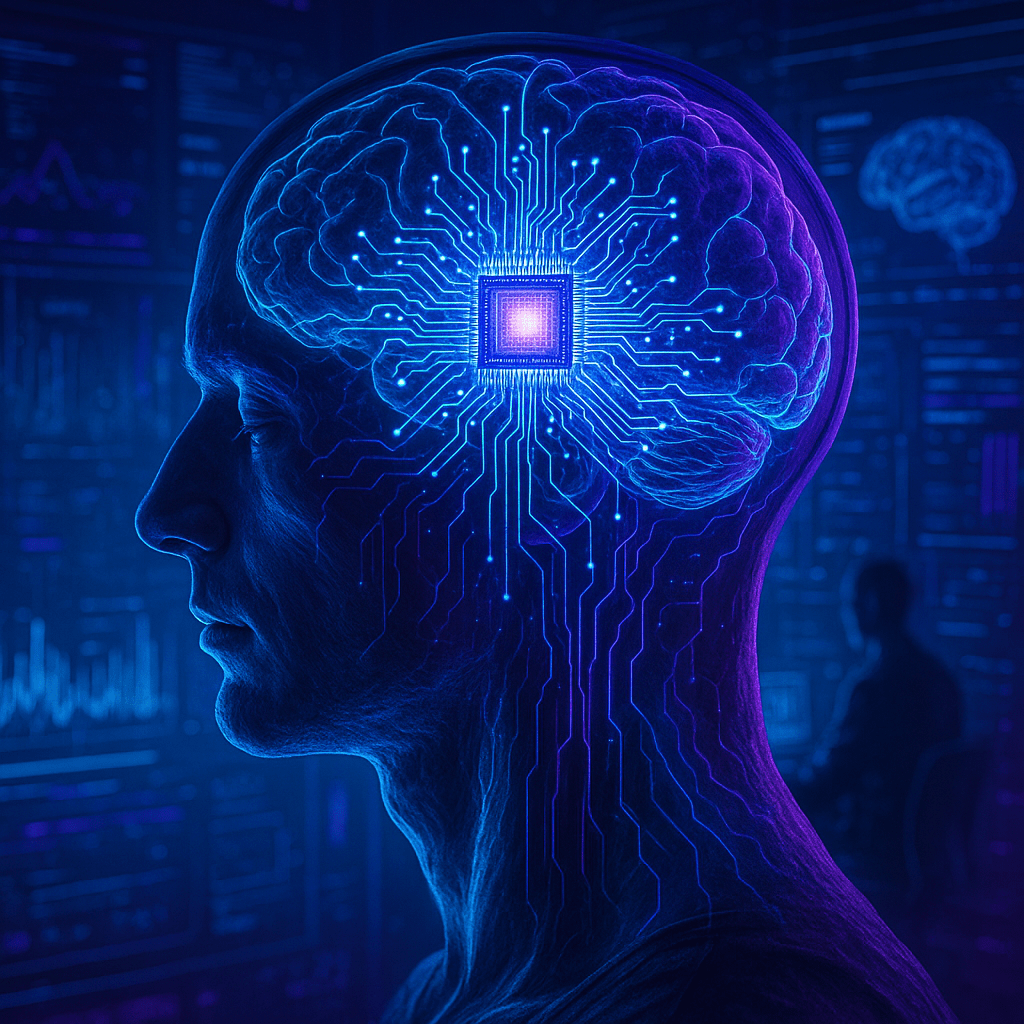
Neuralink is not just another tech gadget—it’s a brain-computer interface (BCI) designed to bridge the gap between human cognition and artificial intelligence. Here’s the breakdown:
🔹 The Hardware: A tiny, coin-sized chip called “The Link” is implanted into the brain by a precision surgical robot.
🔹 The Software: It reads and interprets neural signals, allowing users to control devices with their thoughts.
🔹 The Goal: Restore lost functions (movement, speech) for people with disabilities—and eventually enhance human cognition.
The first patient, Noland Arbaugh, who was paralyzed from the shoulders down, can now:
✔ Play video games
✔ Browse the internet
✔ Communicate digitally—all telepathically.
If that doesn’t make you rethink the future, what will?
Medical Miracle or Transhumanist Fantasy?
The Good: Life-Changing Breakthroughs
Neuralink’s most immediate impact is in medicine:
- Spinal cord injuries: Restoring movement for paralyzed patients.
- Neurodegenerative diseases: Potential treatments for ALS, Parkinson’s, and epilepsy.
- Blindness & deafness: Future versions could restore senses via direct brain stimulation.
The Controversial: The AI-Human Hybrid Future
Musk isn’t stopping at medical use. His long-term vision?
- Telepathy: Sending thoughts directly to another person.
- Instant learning: Downloading skills like in The Matrix.
- Digital immortality: Backing up human consciousness.
Sounds incredible—but should we be excited or terrified?
The Dark Side: Risks & Ethical Nightmares
Not everyone is cheering. Neuralink faces serious concerns:
⚠ Brain Hacking: If your phone can be hacked, what about your mind?
⚠ Inequality Divide: Will only the rich get cognitive upgrades, creating a “superhuman” class?
⚠ Animal Testing Scandals: Past trials faced backlash over alleged rushed experiments.
Regulators are scrambling to keep up. Is the tech advancing faster than our ability to control it?
What’s Next? A Timeline to the Future
📅 2025-2026: Expanded human trials for paralysis patients.
📅 2027-2030: Potential FDA approval for broader medical use.
📅 2030+: Consumer versions? Musk has hinted at “cognitive enhancement” for healthy users.
The big question: Would you get a brain chip if it meant unlocking superhuman abilities?
Final Verdict: Revolution or Risk?
Neuralink is either the most important invention of the century—or a dystopian nightmare waiting to happen. One thing’s certain: The boundary between human and machine is blurring faster than ever.
What Do You Think?
✅ “Sign me up! I want mind-controlled tech!”
❌ “No way—this is playing God.”
Drop your thoughts below! And if this blew your mind, share it with someone who needs to see it.
🔥 Want more future-tech deep dives? [Subscribe for updates!]
 Metropolitan