


By Jamil, Investigative Correspondent | April 9, 2025
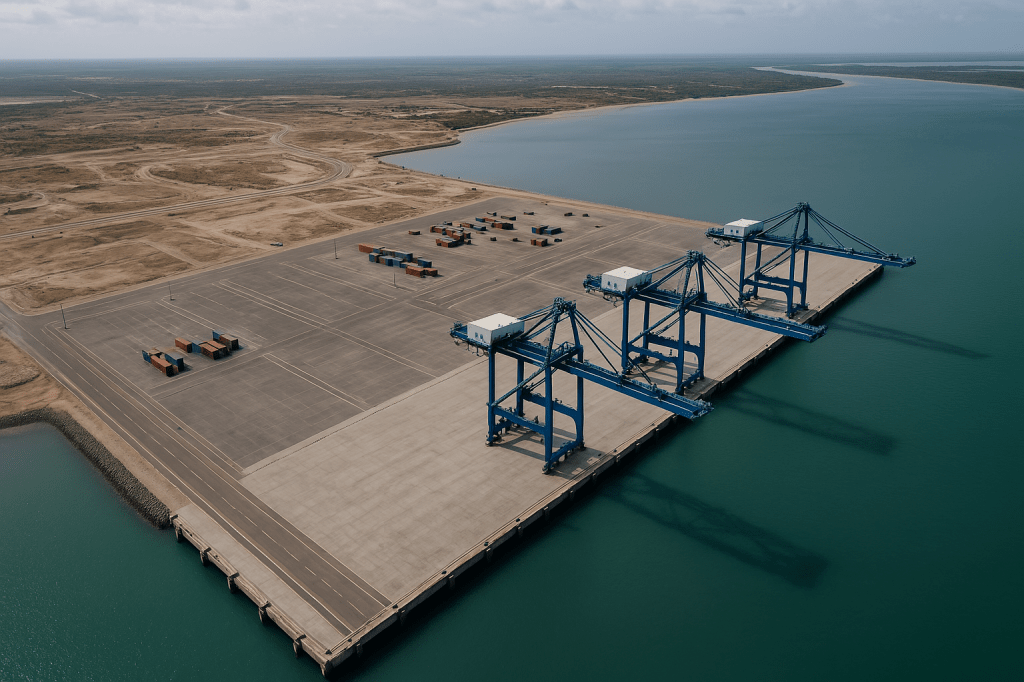
Lamu, Kenya — Once hailed as the crown jewel of East Africa’s infrastructural revolution, the Lamu Port-South Sudan-Ethiopia-Transport (LAPSSET) Corridor Project is now mired in controversy, missed deadlines, and mounting public frustration. A project envisioned to transform Kenya into a regional trade powerhouse has instead become a cautionary tale of ambitious dreams hamstrung by mismanagement, opacity, and broken promises.
Launched in 2012 with great fanfare, LAPSSET was designed as a multi-billion dollar mega-corridor to connect Kenya’s Lamu Port to South Sudan and Ethiopia through roads, railways, and pipelines. The promise? Economic revitalization, job creation, and strategic geopolitical positioning. The reality? Over a decade later, only three berths have been constructed at the Lamu Port, with little supporting infrastructure to operationalize them.
Billions Spent, But Idle Berths Stand Silent
Kenya has already poured over KSh 40 billion into the Lamu Port alone. Despite the massive financial injection, the port remains largely idle. Container traffic is negligible. Rail lines are non-existent. The proposed highways remain patchworks of incomplete and eroding segments. The oil pipeline, once touted as a linchpin of regional energy transport, exists only on paper.
“What’s the use of a port with no railway, no roads, no cargo?” asks Fatma Mohamed, a Lamu local and fisherwoman who has seen her livelihood threatened by dredging and land reclamation. “They said we’d get jobs. We got displacement instead.”
Communities Marginalized, Environment Sacrificed
Beyond financial woes, the human and environmental toll of LAPSSET has been staggering. Indigenous communities, particularly in Lamu and Isiolo, claim they were excluded from key decisions. Promised compensations for land acquisition and displacement have either been delayed or denied. Environmental groups warn that the destruction of marine ecosystems, forests, and heritage sites has pushed local biodiversity to the brink.
A recent report by the National Environment Tribunal revealed that several Environmental Impact Assessments (EIAs) for the LAPSSET projects were either flawed or ignored. “This project has bulldozed its way through fragile ecosystems without adequate mitigation plans,” the report reads.
Political Fallout and Investor Fatigue
With rising public scrutiny and growing evidence of financial mismanagement, the political stakes have intensified. Opposition leaders have called for a parliamentary probe into how funds were utilized and why so many timelines have been missed.
“LAPSSET has become a white elephant,” said Senator Muriuki Ndiritu during a heated session in Parliament. “We demand accountability. Kenyans deserve to know where their money went.”
International investors—once lining up to back the grand project—have begun to pull out, citing instability, lack of clear governance, and concerns over return on investment. China, initially a key financier and contractor, has reportedly frozen further disbursements pending a comprehensive audit.
A Vision in Jeopardy
What was meant to symbolize Kenya’s economic rise now threatens to become a permanent scar of overreach and poor planning. Yet, experts argue that the project can still be salvaged—if there’s political will.
Dr. Amina Otieno, a development economist, believes transparency and community engagement are key to reviving LAPSSET. “This project still holds potential,” she says. “But the government must shift from top-down arrogance to participatory development. That’s the only way forward.”
As the sun sets over the dormant berths of Lamu, the nation watches—hopeful but skeptical. The LAPSSET Corridor still waits for the train that never came.
Have a tip about this story? What do you think happened?🤔
 Metropolitan