


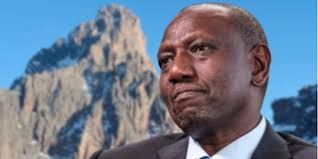
In the ever-evolving world of Kenyan politics, the dynamics of power often shift with calculated moves, especially in the wake of leadership changes. One of the most discussed topics recently has been President William Ruto’s planned visit to the Mt. Kenya region, a key stronghold in his political journey. This visit takes on added significance when viewed in relation to the ousted deputy president, Rigathi Gachagua, who had previously represented this region as a key figure in Ruto’s administration. This planned visit is not just about addressing the electorate; it signals a recalibration of Ruto’s political strategy in light of shifting alliances and the reconfiguration of regional politics.
The Political Landscape in Mt. Kenya
Historically, the Mt. Kenya region has held immense political power in Kenya. With a large portion of the country’s population and significant economic influence, the region has traditionally been a swing vote and a vital support base for any presidential candidate. During the 2022 elections, William Ruto managed to secure the region’s support with his promise of a ‘hustler’ revolution and his close working relationship with then-deputy president, Rigathi Gachagua.
However, the political landscape began to shift after the elections, with Gachagua being ousted from his role as Deputy President in a move that left many questioning the power dynamics between the two leaders. Gachagua, who once had a formidable presence in the region, no longer holds the same position of influence, making Ruto’s presence in Mt. Kenya crucial for maintaining stability and support.
Ruto’s Visit: A Strategic Power Play
President Ruto’s visit to Mt. Kenya comes at a time when his leadership is facing heightened scrutiny, both from the opposition and from the public. While the region overwhelmingly supported his election, there are signs that the ground support is shifting. Some political analysts have suggested that Ruto needs to reassert his dominance and reconnect with the electorate in Mt. Kenya, especially in light of his strained relationship with Gachagua, whose ousting has created a void in leadership.
By visiting Mt. Kenya, Ruto aims to cement his standing in the region and reassure his supporters that he remains connected to the community. The visit is a deliberate attempt to show that his administration values the region and its people, which is crucial to maintaining a sense of loyalty and support. Furthermore, by addressing the public directly, Ruto hopes to counter any narrative suggesting that his administration is losing touch with the grassroots.
Implications of Gachagua’s Ousting
The ousting of Rigathi Gachagua as Deputy President is perhaps one of the most significant developments in Kenya’s recent political history. Gachagua, who hails from Mt. Kenya, had been a staunch ally of Ruto during the campaign, helping to rally the region behind him. However, as Deputy President, Gachagua’s influence began to wane, as he faced increasing criticism over his leadership style and his perceived sidelining by Ruto’s government. His removal from office has opened the door for new power players to emerge, which leaves the region’s political future uncertain.
For Ruto, Gachagua’s ousting represents both an opportunity and a challenge. While it creates a vacuum in Mt. Kenya’s leadership, it also presents Ruto with the chance to establish new relationships with the region’s influential figures. He may seek to replace Gachagua’s influence with new faces, possibly aligning with regional leaders who are more in tune with the current socio-political climate.
The Role of Regional Politics
Mt. Kenya has long been seen as a kingmaker in Kenyan politics. While Ruto has managed to secure a win in the region, it is crucial that he strengthens his grip on the region as political players from various factions look to capitalize on Gachagua’s absence. Leaders who once backed Gachagua may now see an opening to forge their own alliances, which could result in the formation of competing political factions within the region.
For Ruto, this means that maintaining unity within the region will be paramount. His visit will likely include efforts to court influential leaders and grassroots movements alike. He may need to reinforce his ties with the youth, women, and key business stakeholders who are influential in driving the region’s economy and political fortunes.
Conclusion: A New Era for Mt. Kenya Politics?
As President Ruto gears up for his visit to Mt. Kenya, the region’s political future hangs in the balance. The removal of Rigathi Gachagua from the Deputy President position has created a new playing field, with Ruto now needing to navigate the complex web of alliances and rivalries that shape the region. His visit will be an important litmus test for his ability to maintain control and secure the loyalty of the people in this vital region.
Whether or not Ruto can successfully consolidate his support in Mt. Kenya will depend on how well he handles the post-Gachagua power dynamics. What is clear is that his upcoming visit will be a defining moment in his presidency, one that could shape the political landscape of Kenya for years to come.
 Metropolitan