


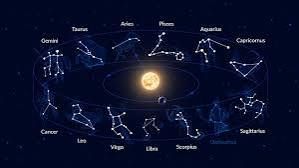
Constellations have been a source of fascination for humanity for thousands of years. From ancient civilizations to modern-day stargazers, these celestial patterns have inspired mythologies, navigational systems, and even influences in astrology. In this blog post, we will explore the various constellations, their history, and the belief in their influence on human life.
What Are Constellations?
A constellation is a group of stars that form a recognizable pattern or shape in the night sky. While the stars within a constellation may appear close together, they are often light-years apart. The International Astronomical Union (IAU) has officially recognized 88 constellations that divide the entire night sky. These groupings are mostly based on ancient traditions, particularly from Greek and Roman mythologies, but they have also been influenced by various cultures, including the Chinese, Arab, and Native American traditions.
A Journey Through Some of the Most Famous Constellations
Orion
Overview: One of the most recognizable constellations, Orion, is visible across the globe. It’s often referred to as “The Hunter” because of its distinct shape, which includes a line of three stars that form Orion’s Belt.
Significance: Orion is prominent in many ancient mythologies. In Greek mythology, Orion was a great hunter who was placed in the sky after his death. The constellation is often associated with strength and bravery.
Effect on Human Life: Historically, Orion was used by sailors for navigation, especially in the Mediterranean and across the oceans. Some believe that the alignment of stars in Orion can be linked to certain astrological events that influence human behavior, especially with respect to ambition and perseverance.
The Big Dipper (Ursa Major)
Overview: The Big Dipper is part of the larger Ursa Major constellation. It consists of seven bright stars and is one of the most famous star patterns in the Northern Hemisphere.
Significance: In many cultures, the Big Dipper represents a bear. For Native Americans, the stars of the Big Dipper were believed to represent a bear chasing a group of hunters. In medieval Europe, it was often seen as a wagon or a plough.
Effect on Human Life: The Big Dipper has been used for navigation for centuries. It is a reliable guide to finding the North Star (Polaris), which helps travelers in the Northern Hemisphere determine direction. In astrology, those born under the influence of Ursa Major are believed to possess qualities of leadership and resilience.
Cassiopeia
Overview: Cassiopeia is another easily recognizable constellation, shaped like a “W” or “M” depending on its position in the sky. It represents the queen from Greek mythology, who was known for her beauty and vanity.
Significance: In Greek mythology, Cassiopeia was punished for her arrogance by being placed in the sky. This story is often used as a cautionary tale about vanity.
Effect on Human Life: In astrology, those born under the influence of Cassiopeia are often said to possess strong self-confidence, ambition, and a drive for success, but may also face challenges related to ego and pride.
The Influence of Constellations on Human Life: Astrology vs. Astronomy
While astronomy is the scientific study of celestial bodies, astrology is the belief that the positions and movements of stars and planets can influence human events and behaviors. Astrological signs, derived from constellations, are believed to affect personality traits and life events. The Zodiac, for instance, is divided into 12 signs, each corresponding to a specific constellation.
Aries (March 21 – April 19): Associated with the constellation Aries, this sign is linked to qualities like assertiveness, leadership, and determination.
Taurus (April 20 – May 20): Linked to the constellation Taurus, this sign is believed to bring traits such as practicality, reliability, and stubbornness.
Gemini (May 21 – June 20): Associated with Gemini, it represents duality, communication, and adaptability.
Many people turn to astrology to gain insight into their personalities, relationships, and even career choices, influenced by the constellations in which their birth dates fall.
Cultural Significance of Constellations
In addition to astrology, constellations have had a deep cultural impact. Different cultures have attributed various meanings and stories to the same groups of stars:
Ancient Egyptians: The pyramids at Giza are aligned with the stars in Orion’s Belt. The ancient Egyptians believed that the soul of the pharaoh would travel to the stars in Orion to join the gods.
Chinese Astronomy: The Chinese have their own constellations and celestial maps. For example, the Seven Star Cluster is similar to the Big Dipper and is part of the Northern Dipper constellation.
Polynesian Navigation: Polynesians used the stars for navigation across the vast Pacific Ocean. They had an intimate knowledge of the constellations and used them to guide their voyages.
How Constellations Continue to Shape Our Lives Today
Today, constellations continue to influence our lives in various ways. They are often used in literature, art, and popular culture, providing inspiration for stories, movies, and songs. In addition, modern astronomy continues to study these celestial patterns to uncover the mysteries of the universe.
Constellations also provide a link to our shared human history. Whether used for navigation, as tools for understanding the seasons, or as sources of personal identity in astrology, they remind us of our connection to the night sky and our place in the vast cosmos.
Conclusion
While constellations are primarily scientific phenomena that help astronomers understand the structure of the universe, they have also played a profound role in human culture and belief systems for millennia. From guiding sailors on the seas to shaping the way we view our personalities and destinies, the constellations continue to captivate and inspire us. Whether you’re gazing up at the night sky with wonder or consulting your horoscope, the stars above us remain a source of mystery and fascination.
 Metropolitan