


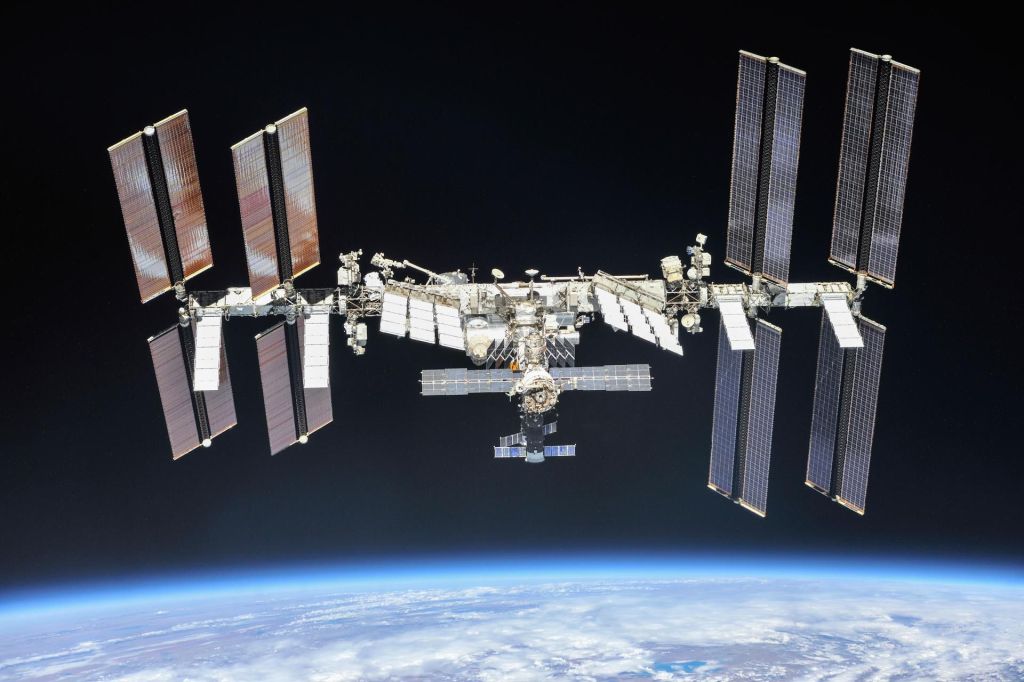
The International Space Station (ISS) stands as a testament to humanity’s collective ambition, technological prowess, and spirit of cooperation. Orbiting approximately 400 kilometers above the Earth’s surface, this marvel of engineering represents the culmination of decades of scientific advancement and international collaboration. From its inception to its current capabilities, the ISS has played a crucial role in furthering our understanding of space, fostering international partnerships, and paving the way for future exploration beyond Earth’s confines.
The history of the ISS traces back to the late 20th century when the idea of a permanent human presence in space gained traction. In 1984, President Ronald Reagan proposed the concept of a space station, which eventually evolved into a collaborative effort involving multiple space agencies. The initial partnership included NASA, Roscosmos (formerly known as the Russian Federal Space Agency), the European Space Agency (ESA), the Japan Aerospace Exploration Agency (JAXA), and the Canadian Space Agency (CSA). This partnership laid the foundation for what would become the most ambitious space exploration project in history.
Construction of the ISS began in 1998 with the launch of the Russian module, Zarya, followed by the American module, Unity. Over the years, additional modules and components were added, each contributing to the station’s functionality and expanding its capabilities. The assembly process involved numerous spacewalks, robotic maneuvers, and logistical challenges, showcasing the collaborative efforts of astronauts and engineers from around the world.
One of the most remarkable aspects of the ISS is its international nature. Unlike previous space missions, which were primarily driven by national interests, the ISS embodies a truly global endeavor. Each participating country contributes specialized modules, scientific experiments, and personnel, reflecting a shared commitment to advancing human knowledge and exploration. This multinational cooperation not only enhances the scientific output of the station but also fosters diplomatic ties and promotes peaceful collaboration in space.
From a technological standpoint, the ISS represents a marvel of engineering ingenuity. The station consists of interconnected modules that serve various purposes, including living quarters for astronauts, laboratories for scientific research, and facilities for docking spacecraft. Advanced life support systems ensure the well-being of crew members, while sophisticated instrumentation enables a wide range of scientific experiments to be conducted in microgravity conditions. Additionally, the ISS serves as a platform for testing new technologies and techniques that will be vital for future space exploration endeavors, such as long-duration missions to Mars and beyond.
The capabilities of the ISS are diverse and far-reaching. Scientific research conducted aboard the station encompasses fields such as biology, physics, astronomy, and materials science. Microgravity conditions allow scientists to study phenomena that are impossible to replicate on Earth, leading to groundbreaking discoveries in areas such as protein crystallization, combustion, and fluid dynamics. Furthermore, the ISS serves as a testbed for technologies that could benefit life on Earth, such as advanced medical treatments, environmental monitoring systems, and sustainable energy solutions.
Beyond its scientific objectives, the ISS plays a crucial role in preparing humanity for the challenges of space exploration. Crew members undergo rigorous training to adapt to the microgravity environment and perform complex tasks in a confined space. The station serves as a platform for testing spacecraft systems, conducting spacewalks, and practicing emergency procedures, thereby mitigating the risks associated with long-duration spaceflight. Moreover, the international cooperation fostered by the ISS serves as a model for future space missions, where collaboration will be essential for tackling the formidable challenges of exploring the cosmos.
In conclusion, the International Space Station stands as a shining example of what humanity can achieve when we work together toward a common goal. From its humble beginnings to its current status as a beacon of international cooperation and scientific discovery, the ISS represents the pinnacle of human ingenuity and exploration. As we look to the future, the lessons learned from the ISS will continue to inspire us to reach for the stars and expand the boundaries of human knowledge and possibility.
 Metropolitan