
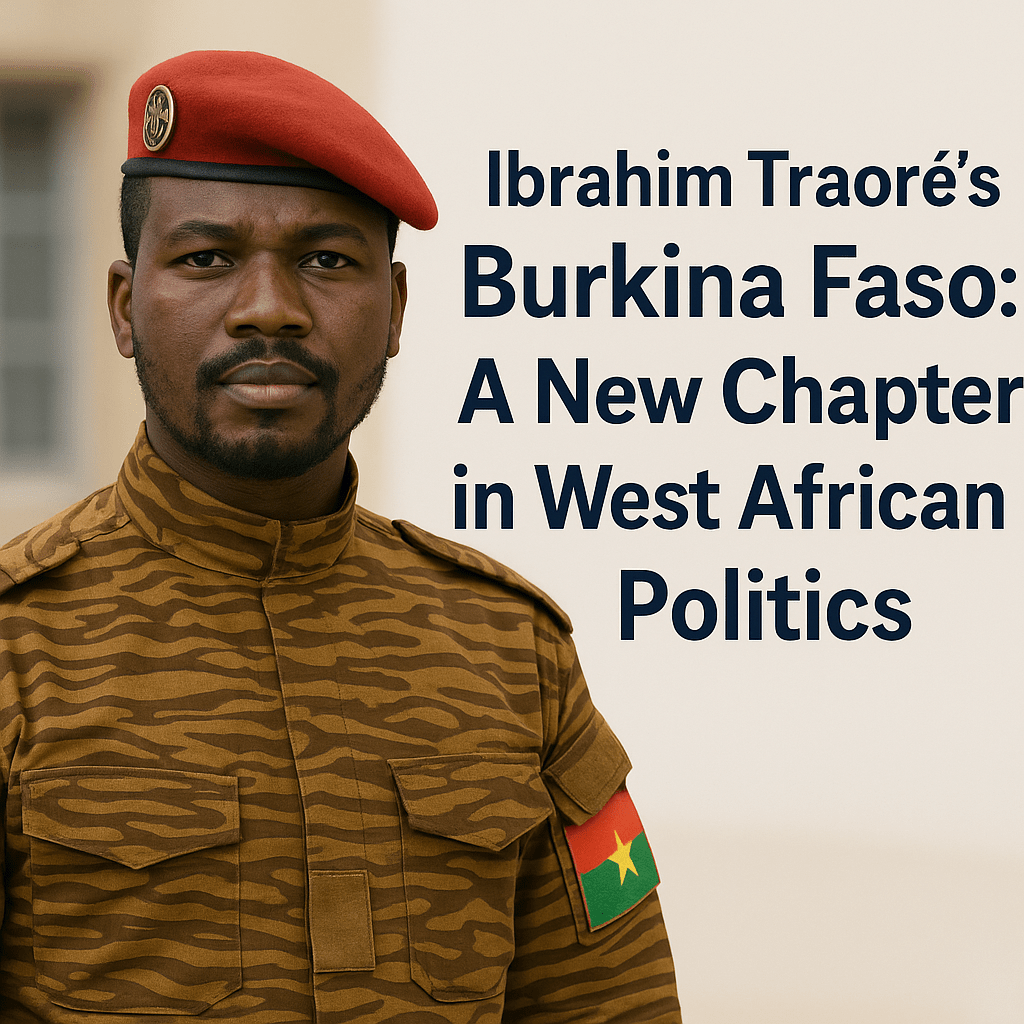
In recent years, Burkina Faso has been at the heart of a political transformation, and much of this shift is credited to the dynamic leadership of Captain Ibrahim Traoré. Since taking the reins of power in September 2022, Traoré has brought a youthful, reformist spirit that is reshaping not only the country’s domestic landscape but also its position in the regional and international arena.
A New Vision for Governance
At just 34 years old when he became interim president, Traoré represented a generational change in leadership. His message was clear: restore security, combat corruption, and return power to the people. Under his leadership, Burkina Faso has launched a series of initiatives aimed at strengthening national sovereignty and reducing reliance on foreign military forces.
One of the most visible changes was the termination of military agreements with France, marking a decisive shift away from traditional colonial ties. In their place, Traoré’s administration has emphasized self-reliance, mobilizing thousands of local volunteers to defend the nation against insurgent threats. This grassroots approach has rekindled national pride and fostered a sense of collective responsibility.
Economic Realignment and Resource Control
Another hallmark of Traoré’s leadership is his assertive stance on natural resource management. Burkina Faso is rich in gold and other minerals, and Traoré has pushed for greater national control over these assets. New contracts and renegotiations with mining companies have aimed to ensure that more profits benefit local communities rather than flowing abroad.
This move has resonated with citizens who have long felt excluded from the wealth beneath their feet. It has also sent ripples through international markets, signaling that Burkina Faso is no longer willing to accept exploitative terms.
Regional Solidarity and a Shift in Alliances
Traoré has also played a key role in fostering regional solidarity among fellow Sahelian nations. Alongside Mali and Niger, Burkina Faso has spearheaded discussions around the formation of the Alliance of Sahel States (AES), a proposed confederation focused on security cooperation, economic integration, and collective sovereignty.
This regional pivot has redefined alliances in West Africa. While traditional partners such as France and the EU watch cautiously, new actors like Russia and Turkey have shown growing interest. Traoré’s balanced diplomatic approach reflects a multipolar strategy that seeks practical partnerships over ideological alignment.
The Impact Beyond Borders
Internationally, Traoré’s policies have sparked debate. Some applaud his firm stance on sovereignty and reform, while others worry about democratic backsliding. Yet one thing is clear: Burkina Faso has become a symbol of the changing tide in African governance—where younger leaders demand equity, transparency, and respect on the global stage.
For many across Africa, Ibrahim Traoré embodies a broader desire for renewal—a call for homegrown solutions and a break from the status quo. Whether or not his vision succeeds in the long term, the Traoré era has already shifted the conversation about what is possible for Burkina Faso and the region at large.
 Metropolitan